Cocaine Abuse Brain

WHAT IS COCAINE?
Since it enters the system directly through the lungs, smokable cocaine reaches the brain faster than when cocaine is snorted, and causes a more intense re-action. According to the 1997 National Household Survey on Drug Abuse, an estimated 1.5 million Americans were current users of cocaine. … View Doc

How Is Cocaine Abused?
With repeated use, cocaine can cause long-term changes in the brain's reward system and in other brain systems as well, which may even tually lead to addiction. For additional information on cocaine, please refer to the following sources on NIDA's Web site, www.drugabuse.gov: • Cocaine: Abuse … Fetch This Document

On The Brain WINTER 06
All drugs of abuse invade the brain’s communica-tion system for a simple reason: they are chemical imposters of the neurotransmitters (chemical mes-sengers) used bythe brain to communicate. Amphetamines and cocaine have features in … Get Document

Guest Editors – Rao Rapaka And Wolfgang Sadée Recent …
The abuse of cocaine is maintained by the drug ’ s effects on brain reward systems, and mediated at least in part by its dopaminergic action. … Read Content

Social Dominance In Monkeys: Receptors And cocaine Dopamine D …
Forcing effects of cocaine. The promise of this model, specifi-cally for vulnerability to drug abuse but more generally to any behavioral phenotype, lies in the ability to use brain-imaging … Access Full Source
Cocaine Dependence: A Fast-track For brain Ageing&
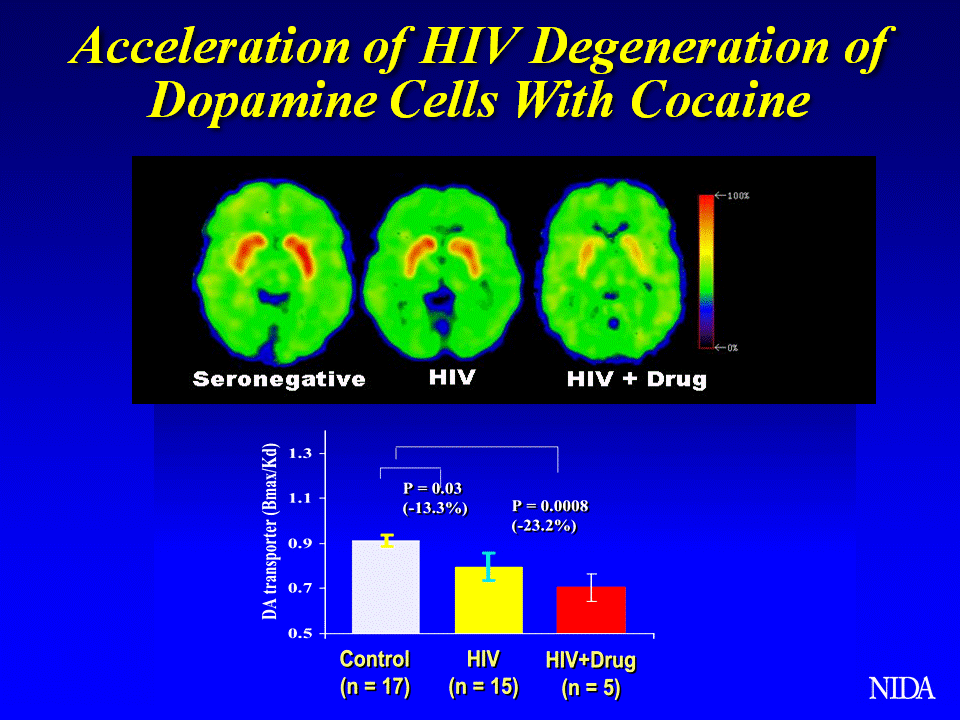
Question of whether cocaine abuse might accelerate the process of normal ageing. Although this is a little-studied area, there are several reasons for assuming that chronic cocaine exposure interferes with the processes of brain ageing. … Read Content
ABOUT DRUGS AND YOUR BODY PRESCRIPTION STIMULANTS
Affect the brain in ways similar to cocaine or other drugs of abuse (see above right). Prescription stimulant abuse can result in abnormally You are abusing … Doc Retrieval

Research NATIONAL INSTITUTE ON DRUG ABUSEReport SERIES …
Cocaine abuse and addiction is a complex problem involving biological changes in the brain as well as a myriad of social, familial, and environmental … View Document

Cocaine:
“Cocaine is a powerfully addictive stimulant that directly affects the brain” (What is Cocaine, 1). Cocaine abuse in any form is a dangerous “game” that leads to destruction. … Retrieve Content

Cocaine (Powder)
Cocaine’s Effects on the Brain Cocaine is a strong central nervous stimulant that interferes with and causes excess Prolonged cocaine abuse can cause a number of other problems including:78 … Read Content

Drugs Change The Way Neurons Communicate
Most drugs of abuse don’t block enzymatic destruction of neurotransmitters, although smoking has been shown to reduce levels of an enzyme that breaks down neurotransmitters, monoamineoxidase. Figure 3.3: When cocaine enters the brain, it blocks the dopamine transporter from … Content Retrieval

Cocaine's brain Effects Might Be Long Term
Previous studies have yielded inconsistent findings on whether cocaine abuse led to long-term mental deficits. 3/16/2003 10:24:00 PM Other titles: Cocaine's brain effects might be long term … Retrieve Document

Addiction Research At Brookhaven A View Of Brookhaven
Receptors for dopamine, a natural brain chemical involved in movement, motivation, and the sensations of pleasure and well-being. • Cocaine abuse lowers overall metabolic activity … Access Document
Review Of Treatments For Cocaine Dependence *J.K. Penberthy …
Cocaine abuse is characterized by a maladaptive pattern of use which results in one or more recurrent and significant Brain scans and medical studies show that certain areas of the brain of cocaine dependent … View This Document
Central Nervous System Infarction Related To Cocaine Abuse
Related to Cocaine Abuse Michael Daras, MD; Alan J. Tuchman, MD; and Stephen Marks, MD Clinical presentations include thirteen cases with hemispheric infarcts, two brain stem … Read Here
ACSM CURRENT COMMENT
Cocaine Abuse in Sports The abuse of recreational drugs, both licit (e.g., alcohol and nicotine) and illicit (e.g. cocaine, marijuana) by athletes far The mechanism of sudden death may be attributable to rhythm disturbances of the heart, seizures, or bleeding into the brain. Cocaine's effects on the … Read Document
SUBSTANCE ABUSE: Stimulants (Cocaine/Amphetamines/PCP/Caffeine)
cocaine abuser. 4.SHOCK may be caused by myocardial, intestinal, or brain infarction, hyperthermia, tachyarrhythmias, or Neonatal Complications: Neglect abuse, cocaine intoxication secondary to breast feeding, physical dependence to cocaine. … Retrieve Content